He Toi Whakairo
Museum of New Zealand Te Papa Tongarewa
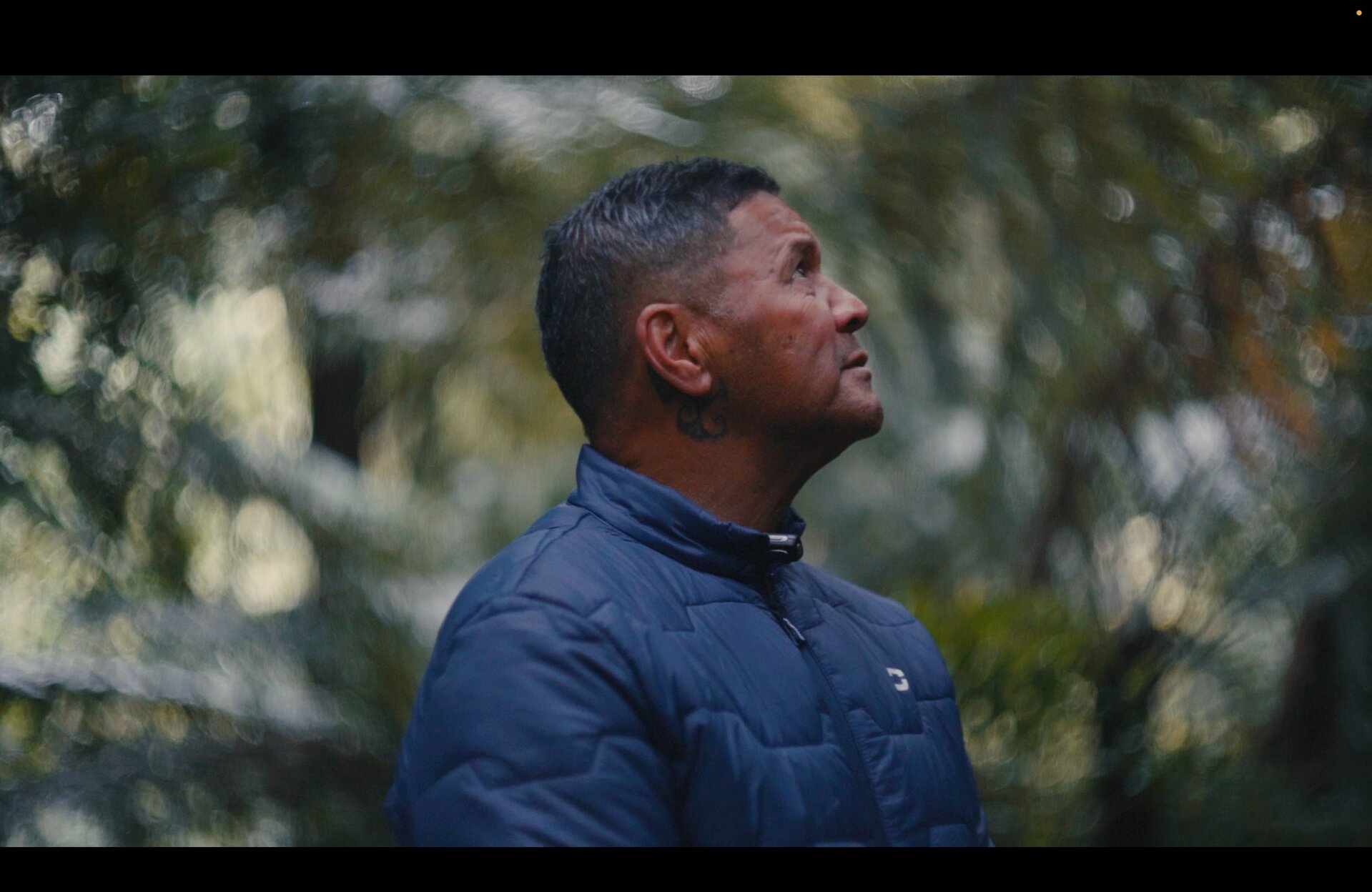
A 5:54 short documentary portrait of master carver Sam Hauwaho (Tūhoe, Te Aitanga a Hauiti) made for Te Papa's He Toi Whakairo exhibition - a cinematic study of whakairo, lineage, and the transmission of mātauranga through one of only two protégés of the late Tohunga Rangi Hetet.
Role
Deliverables
- 5:54 short documentary profile for Te Papa's He Toi Whakairo exhibition
- Cinematic documentation of Sam Hauwaho's carving process and teaching legacy
- Exhibition-ready edit tailored to museum visitor flow
- Integration of archival and contemporary material for intergenerational storytelling
- Public-facing digital story for exhibition audiences
Outcome
Delivered a cinematography-led portrait that functions as an interpretive layer within the He Toi Whakairo exhibition (2026–2027), recording an active teaching lineage at a moment of transition and strengthening Māui Studios' standing in culturally grounded artist documentaries for museum contexts.
Project Overview
He Toi Whakairo is a short documentary portrait of Sam Hauwaho (Tūhoe, Te Aitanga a Hauiti), a carver and teacher whose life has been dedicated to the practice and transmission of whakairo. Filmed for Te Papa Tongarewa's He Toi Whakairo exhibition, the film follows Sam as he works on a commissioned spiral carving inspired by the iro - the wood-boring grub linked to the meaning of the word whakairo - presenting carving as a way of revealing what is already present within the material (Te Ara, 2017).
At the centre of the film is the relationship between knowledge, lineage, and continuity. Sam was taught by the late Tohunga Rangi Hetet and is one of only two protégés of that revered master; the film also captures the closing of his carving classroom at Whitireia, giving the work an added layer of intergenerational significance.
Sam was initially reluctant to appear on camera, so the work began with relationship-building and trust - including multiple solo trips to Wellington before filming - a patient process that shaped the film's tone and made it feel earned rather than extracted.
SOW Snapshot
- Core Deliverables: A 5:54 short documentary profile; cinematic documentation of Sam's carving process and teaching legacy; exhibition-ready edit; integration of archival and contemporary material; public-facing digital story
- Audience: Te Papa exhibition visitors; audiences for toi Māori and Māori artist portraiture
- Format: Short documentary (Sony FX6, 4K, English and te reo Māori), screened within the exhibition
- Screening: He Toi Whakairo exhibition, Te Papa Tongarewa, 2026–2027
- Key Requirements: Cultural respect and trust with the subject, cinematic quality, fidelity to lineage and mātauranga
- Service Connection: Film and Cinematography, Cultural storytelling, Editing and Post-production, Strategic Communication
Outcomes
Māui Studios approached the film as a carefully storyboarded, cinematography-led portrait that gave the carving room to breathe - using excursions beyond the workshop, close observational filming, and experimental techniques including the Laowa Probe lens for extreme close-ups within the spiral work, giving the film a tactile visual language matched to the intricacy of the whakairo itself.
By bringing Sam's wife on camera and drawing on archival references to Rangi Hetet, the film widened from a single artist profile into a reflection on whakapapa, teaching, and transmission. Made for an exhibition environment, the final edit was shaped to museum needs - the longer cut reduced to keep the exhibition space moving.
The project carries formal institutional weight - Te Papa's 2024/25 Annual Report records $50,000 in Te Papa Foundation grant support for the He Toi Whakairo exhibition (Te Papa Tongarewa, 2025).
Impact
Intended Outcomes
- Document and honour Sam Hauwaho's practice as both master craft and living philosophy
- Make the philosophy of whakairo more accessible to exhibition audiences
- Acknowledge the lineage from Rangi Hetet into contemporary teaching
- Support wider appreciation of Māori carving as both an artform and a vessel of cultural continuity
Broader Impact
- Strengthens public understanding of whakairo as a living artform, not a museum relic (Te Ara, 2017)
- Records an active teaching lineage at a moment of transition
- Demonstrates Māui Studios' ability to create high-quality Indigenous artist portrait films for museum contexts (Te Papa Tongarewa, 2025)
Future Opportunities
- Further documentary profiles of Māori artists, master practitioners, and large-scale Indigenous works
- Educational use and artist-profile collections beyond the initial exhibition run
- Online exhibition extensions pairing object-based displays with short-form cinematic portraiture
- A repeatable museum storytelling model that deepens interpretation through moving image
References
- Te Ara - The Encyclopedia of New Zealand. (2017). Whakairo - Māori carving. https://teara.govt.nz/en/whakairo-maori-carving
- Te Ara - The Encyclopedia of New Zealand. (2017). Māori architecture - whare Māori: Revival of the whare whakairo. https://teara.govt.nz/en/maori-architecture-whare-maori/page-4
- Museum of New Zealand Te Papa Tongarewa. (2025). Annual Report 2024/25. https://www.tepapa.govt.nz/assets/76067/1764552046-te-papa-annual-report-2024-25.pdf