Power UP – Haerenga
Connexis | Te Pūkenga & The Energy Academy
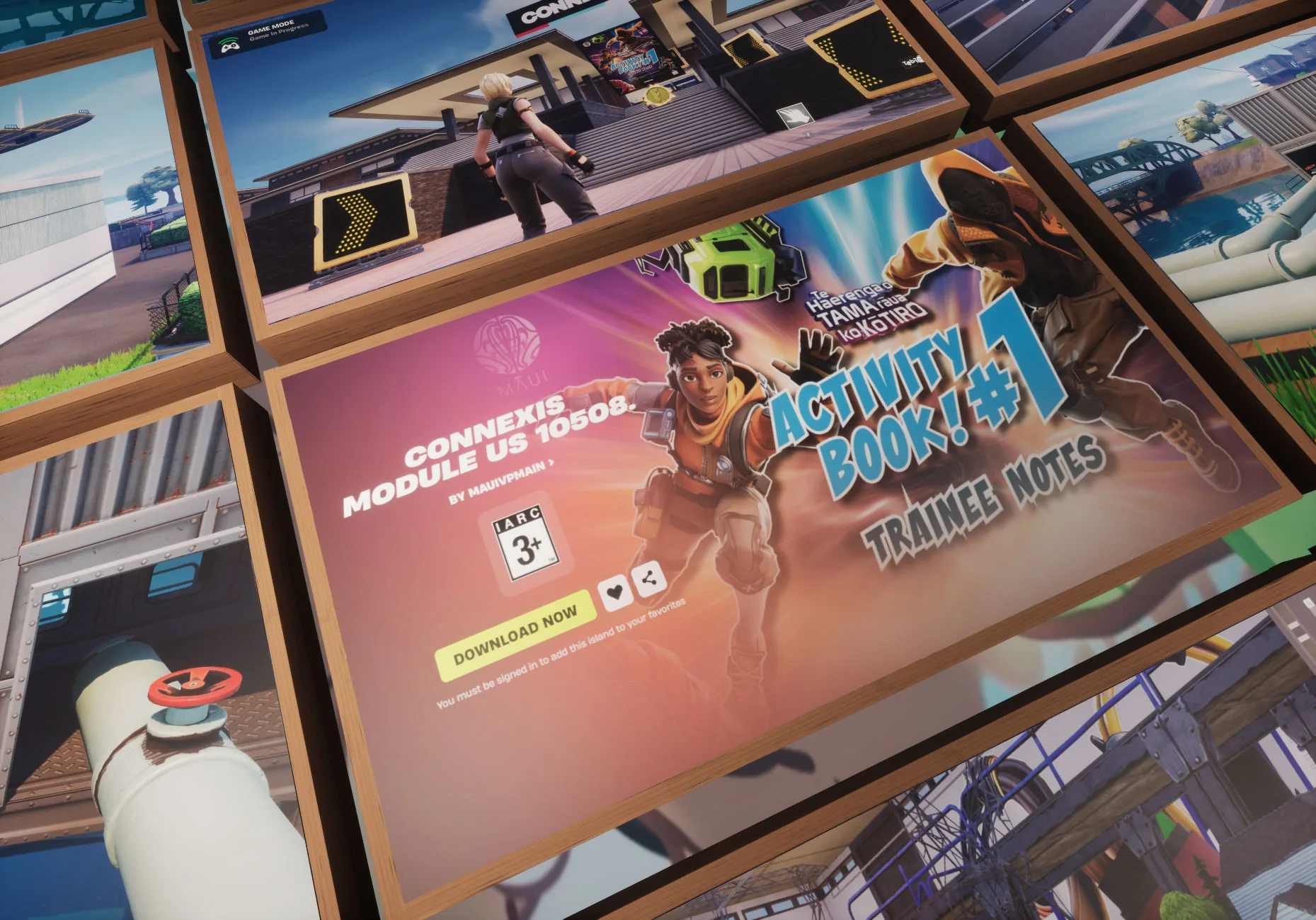
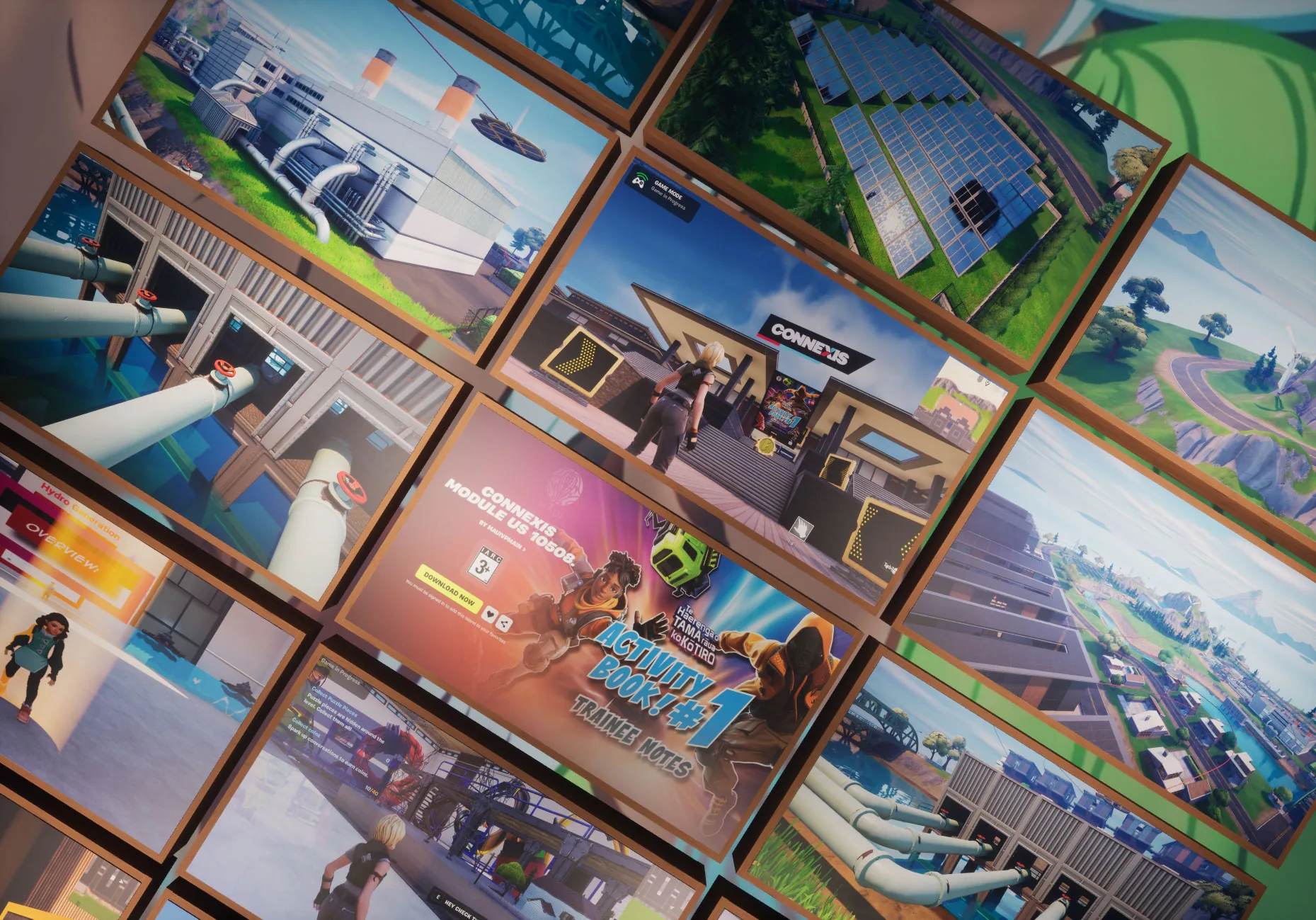
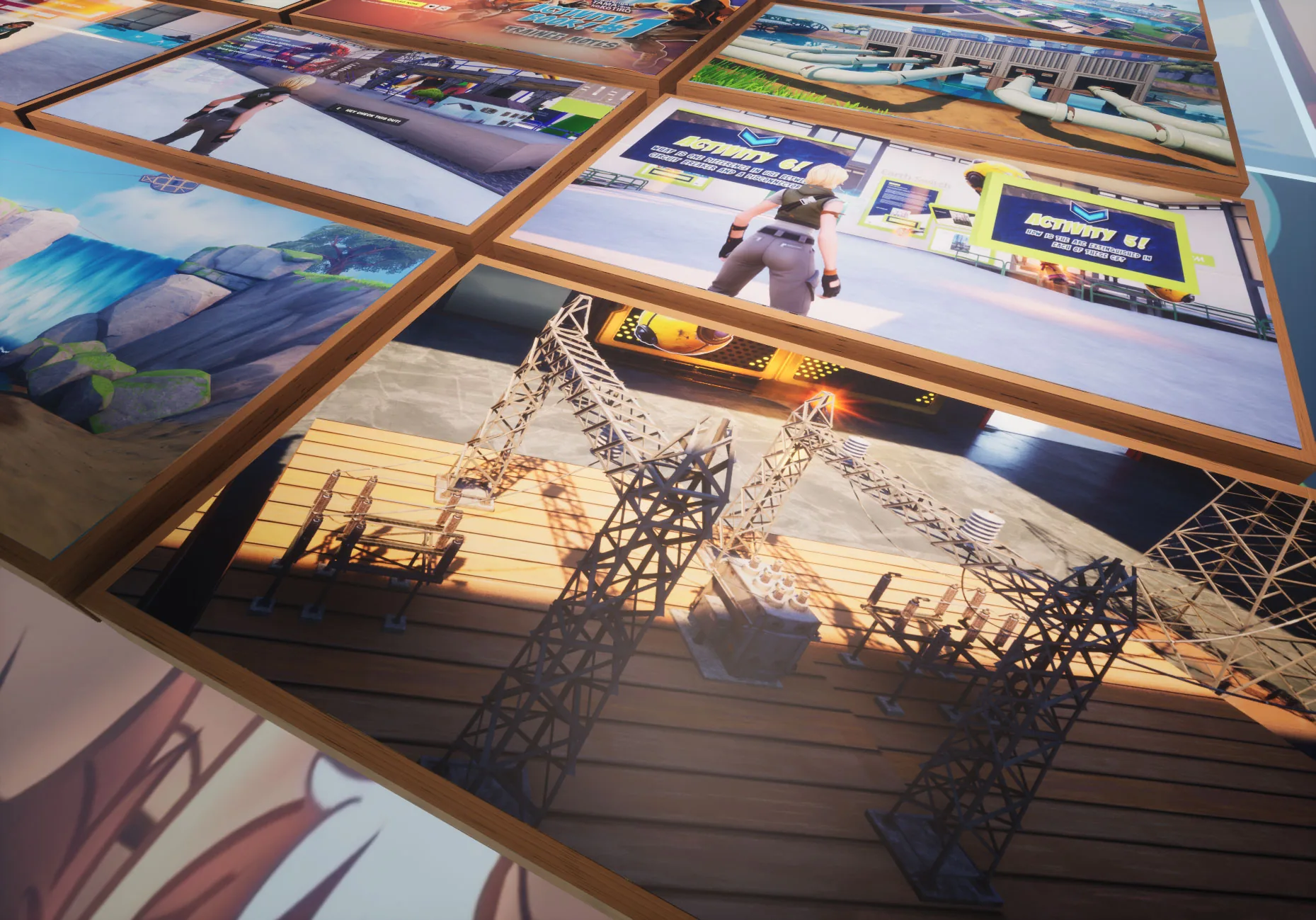
A gamified micro-credential learning platform for the energy and electrical supply industry - four interactive UEFN learning levels paired with four custom activity books, each aligned to a specific training module.
Role
Deliverables
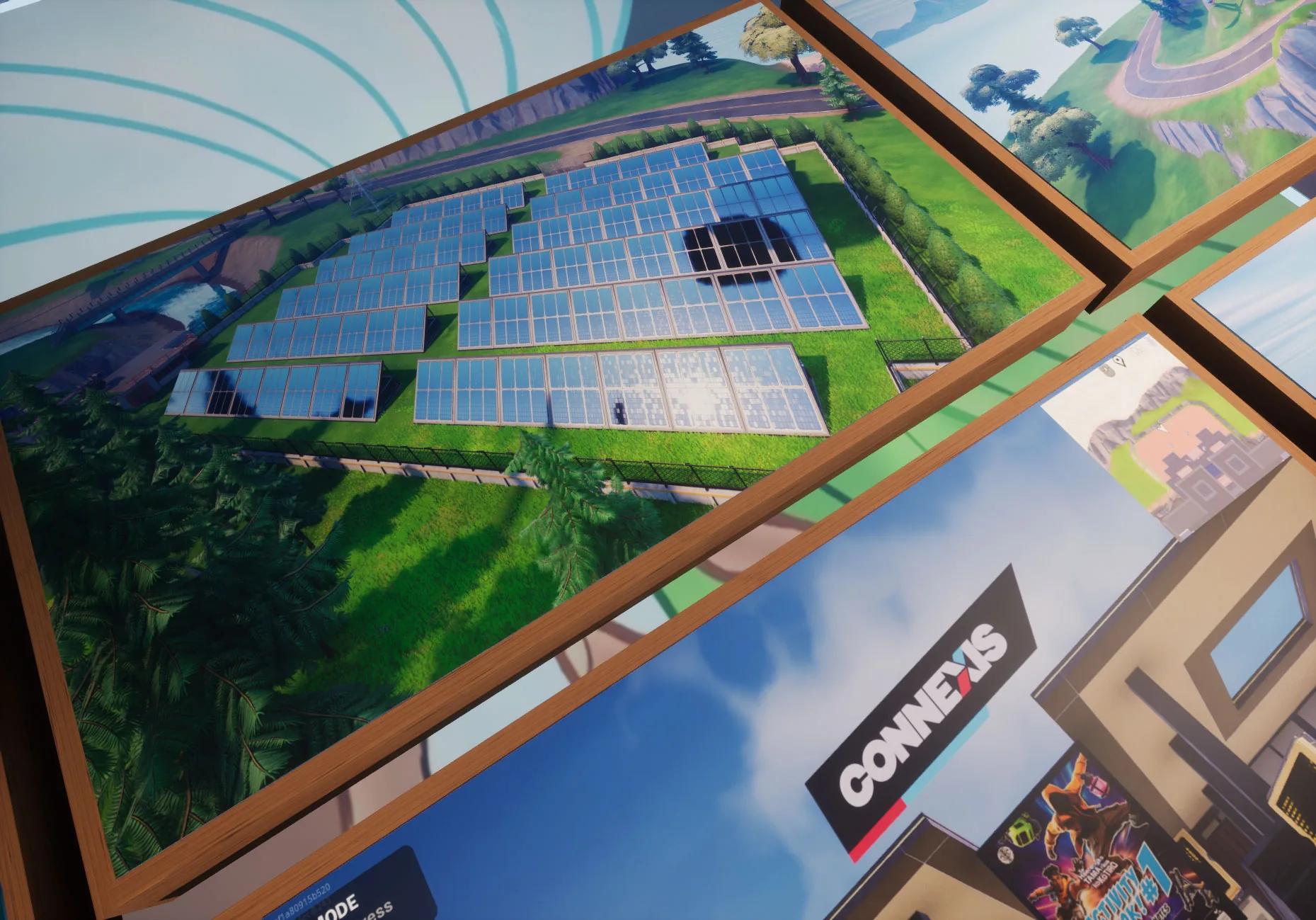
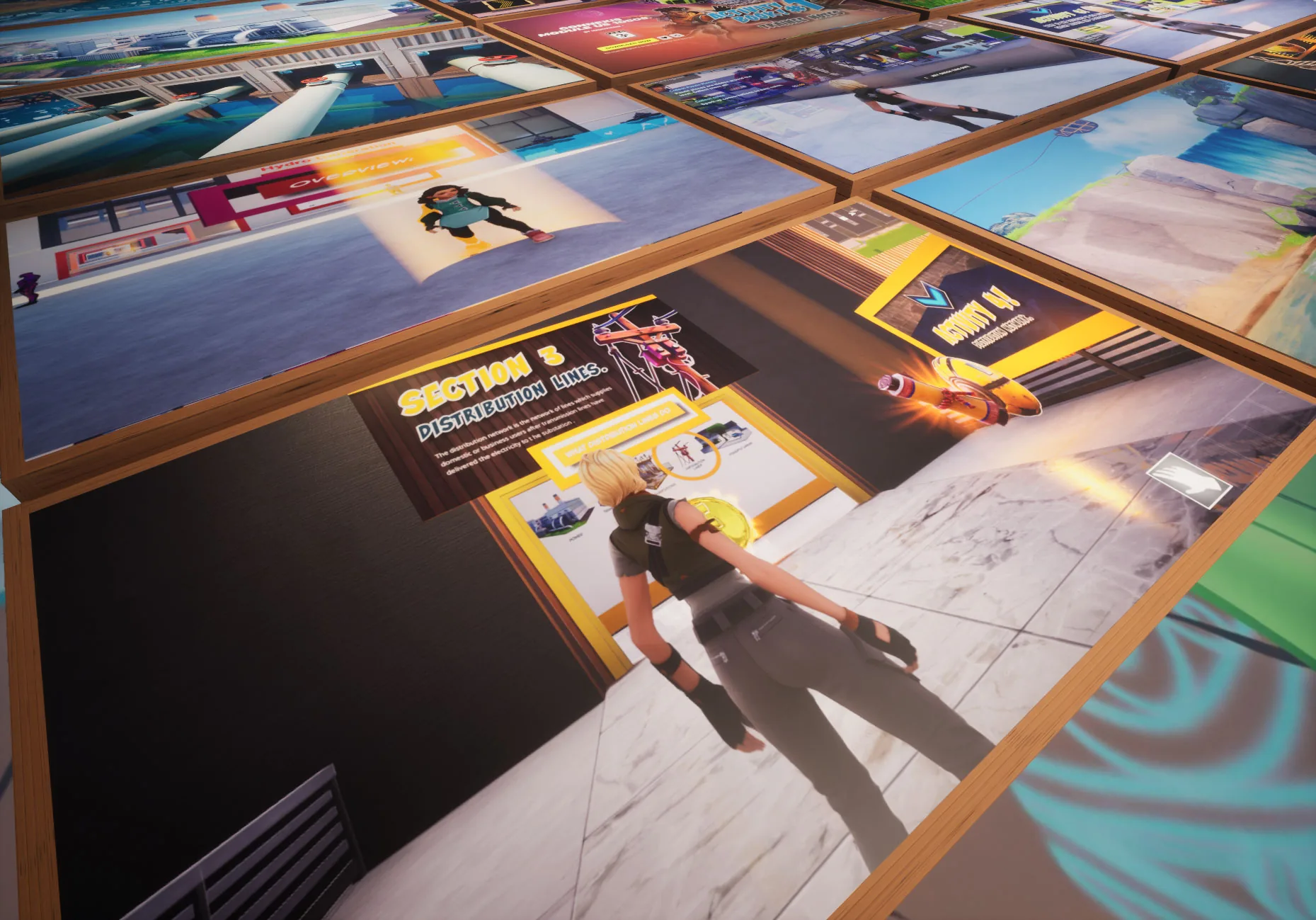
- Four interactive UEFN learning levels mapped to training modules (10508, 18275, 20092, 18038)
- Four custom companion activity books aligned to the same modules
- Four module-aligned learning pathways
- Staged production structure across concept, production, review, QA, and launch
Outcome
A playable vocational learning prototype with a 1:1:1 architecture (module → level → book) that turns structured industry knowledge into modular, outcome-linked interactive educational infrastructure.
Project Overview
Power UP – Haerenga is a gamified micro-credential learning platform developed to support learners in the energy and electrical supply industry through a more interactive mode of training delivery. It combines four interactive UEFN learning levels with four custom activity books, each aligned to a specific training module and its intended learning outcomes, translating existing trainee-note content into a more engaging and accessible format while still supporting formal education pathways and future micro-credential recognition.
Rather than treating game-based learning as entertainment layered on top of training, the project was structured as a blended learning system: each playable environment reinforces technical knowledge through interaction, while each companion book provides a structured resource for guided learning, consolidation, and future assessment integration.
The core challenge in vocational education is delivering content that is both professionally credible and engaging enough to hold attention, especially when the material is technical, procedural, or compliance-heavy. That balance is well supported by research: a 2024 meta-analysis of 22 experimental studies (2008–2023) found a moderately positive effect of gamification on academic performance (Hedges's g = 0.782) (Zeng et al., 2024), and a 2023 systematic review focused on vocational education and training found that gamification and game-based learning can improve performance, engagement, and motivation in VET contexts (Dahalan et al., 2023).
SOW Snapshot
- Core Deliverables: Four interactive UEFN learning levels (Island 01 - Module 10508; Island 02 - Module 18275; Island 03 - Module 20092; Island 04 - Module 18038); four custom companion activity books; four module-aligned learning pathways; staged production across concept, production, review, QA, and launch
- Audience: Learners and trainees in the energy and electrical supply industry; Connexis | Te Pūkenga and The Energy Academy training pathways
- Format: Gamified micro-credential platform - UEFN levels plus print activity books
- Timeframe: October 2024 · 52-week development
- Key Requirements: Alignment to formal module learning outcomes, professional credibility, engagement and repeatability, scalability toward future micro-credential recognition
- Service Connection: Unreal Engine and UEFN, Game Design, Educational resources, Visual Design, Publishing, Strategic Communication
Outcomes
The defining strength of Power UP – Haerenga is its 1:1:1 architecture - one training module to one playable level to one activity book. Each UEFN island reflects the content of its corresponding trainee notes through environment design, characters, dialogue, and scenario-based interaction, while each book extends the same learning outcomes into a structured companion resource. That mapping gives the platform a repeatable, scalable delivery logic rather than a set of one-off levels.
The platform choice is also defensible: Epic positions Fortnite Creative and UEFN as usable educational environments, with classroom-oriented guidance available through its developer ecosystem (Epic Games, n.d.), making the toolset credible as a structured interactive delivery environment for applied learning. The modular design aligns cleanly with NZQA's micro-credential model, in which listed micro-credentials are up to 40 credits (NZQA, n.d.). Delivered against a staged production schedule - with the first milestone completed ahead of time - the project establishes a playable vocational learning prototype that turns structured knowledge into interactive educational infrastructure, not just content.
Impact
Intended Outcomes
- Create a more engaging way for learners to interact with core industry training
- Preserve alignment to formal module outcomes while supporting future credential-linked delivery
- Provide a scalable prototype adaptable to further technical modules, onboarding, refresher learning, and other vocational sectors
- Demonstrate a future-facing training model that reflects the expectations of digitally fluent learners
Broader Impact
- Workforce capability in the energy sector is economically significant and nationally strategic: New Zealand generated 43,879 GWh of electricity in 2024, 85.5% of it from renewable sources (MBIE, 2025), and in March 2026 the Government stated that coordinated action is needed to build the energy workforce to meet future demand (New Zealand Government, 2026)
- Demonstrates Māui Studios' ability to turn structured vocational knowledge into modular, outcome-linked interactive learning, applicable across compliance-based and technical sectors
Future Opportunities
- Additional technical modules across energy and infrastructure training
- Deeper assessment integration within gameplay
- A broader NZQA-linked micro-credential rollout
- Adaptation into other vocational or compliance-based sectors
- Onboarding and refresher-learning applications
References
- Dahalan, F., Alias, N., Shaharom, M. S. N., Jomhari, N., & Baharom, S. N. (2023). Gamification and game based learning for vocational education and training: A systematic literature review. Education and Information Technologies, 28, 5863–5885. https://pmc.ncbi.nlm.nih.gov/articles/PMC9838474/
- Epic Games. (n.d.). Education in Fortnite Creative. https://dev.epicgames.com/documentation/fortnite/education-in-fortnite-creative
- Ministry of Business, Innovation and Employment. (2025). Energy in New Zealand 2025. https://www.mbie.govt.nz/building-and-energy/energy-and-natural-resources/energy-statistics-and-modelling/energy-publications-and-technical-papers/energy-in-new-zealand/energy-in-new-zealand-2025
- New Zealand Government. (2026, March 18). Workforce planning key to meeting New Zealand's energy needs. https://www.beehive.govt.nz/release/workforce-planning-key-meeting-new-zealand%E2%80%99s-energy-needs
- New Zealand Qualifications Authority. (n.d.). About micro-credentials. https://www2.nzqa.govt.nz/qualifications-and-standards/about-qualifications-and-credentials/micro-credentials/
- Zeng, J., Sun, D., Looi, C. K., & Fan, A. C. W. (2024). Exploring the impact of gamification on students' academic performance: A comprehensive meta-analysis of studies from 2008 to 2023. British Journal of Educational Technology, 55(6), 2478–2502. https://doi.org/10.1111/bjet.13471