Barnardos Whare Manaaki Artwork
Barnardos Aotearoa
Toi Māori design elements for a new Barnardos whare manaaki in Ōtautahi - a kaupapa Māori artwork programme, developed with mana whenua, that turns a care environment into a culturally affirming space of dignity, connection, and hope for rangatahi and their whānau.
Role
Deliverables
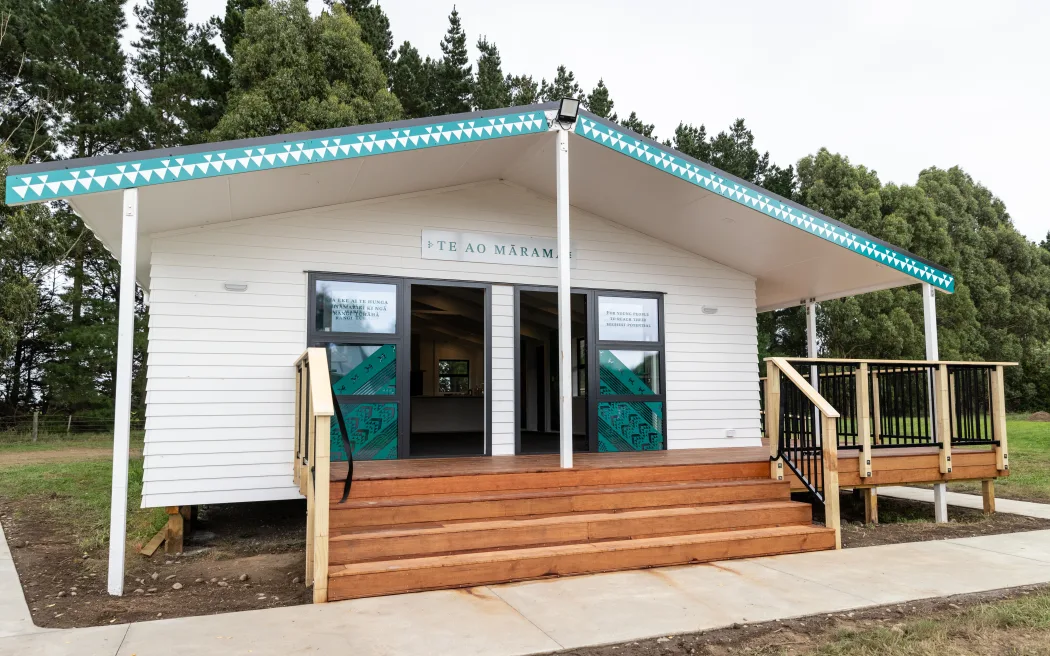
- Exterior whare artwork - tāniko across the maihi; taniko and haehae window frosting
- Interior entrance artwork - poutama and tukutuku
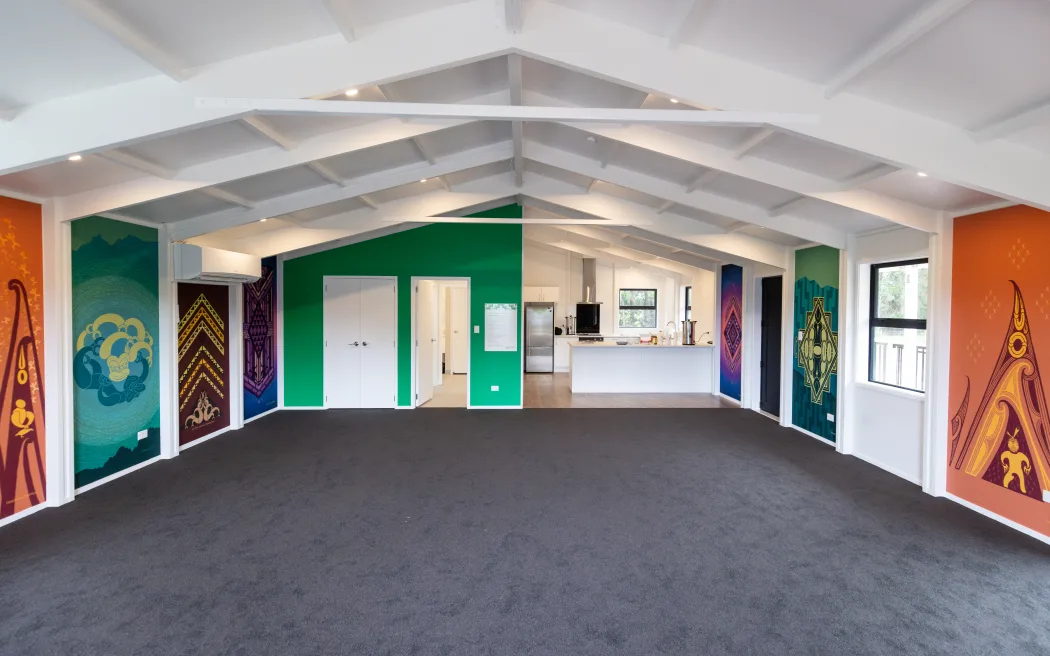
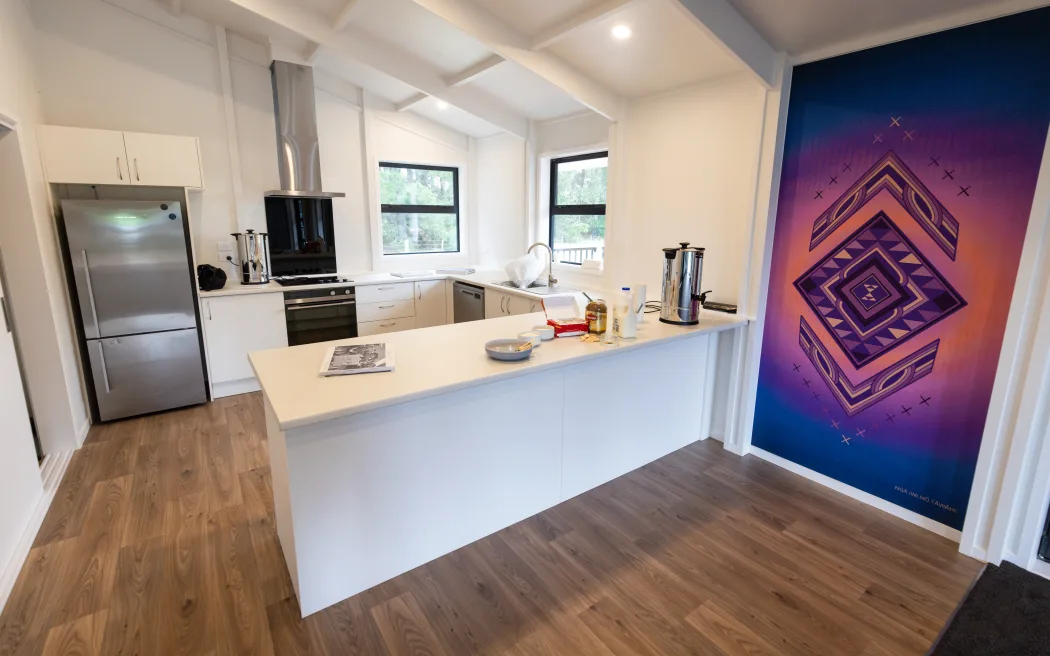
- Interior wall artwork series, including the Tuakiritanga identity wall
- Culminating ninth artwork - Kia Tipu, Kia Ora te Rangatahi
- Design, artwork production, and installation-ready files
Outcome
A whare manaaki transformed into a culturally affirming environment - one connected te ao Māori narrative across exterior, entrance, and interior surfaces, developed with mana whenua, intended to help rangatahi step toward restoration, support, and belonging.
Project Overview
Māui Studios Aotearoa Ltd delivered the toi Māori design elements for a new whare manaaki in Ōtautahi, working in collaboration with mana whenua and Barnardos Aotearoa to help create a space of care, identity, and hope for rangatahi and their whānau (Barnardos, n.d.). The kaupapa centred on supporting young people toward safer, healthier pathways within an environment that acknowledges cultural identity and the importance of belonging.
The artwork was conceived not simply as aesthetics but as a way to help shape a place that could hold dignity, connection, and the possibility of brighter futures - a whare reflecting both cultural grounding and compassionate care. Its design carries a single unifying narrative: a journey toward Te Ao Mārama, the pursuit of light, knowledge, and understanding. It embodies the whakataukī Kia eke ai te hunga taitamariki ki ngā rangi tūhāhā, reimagined here as a call for rangatahi to reach their highest potential.
The central challenge was translating a layered cultural narrative - spanning atua, the pursuit of knowledge, the role of wāhine, and the diverse peoples who pass through the whare - into one coherent artwork programme across very different architectural surfaces: the maihi, window frosting, and interior walls. Each element had to be culturally accurate and meaningful in its own right while reading as part of a single whole, and it was developed in partnership with mana whenua so the toi Māori carried the appropriate authority and care.
SOW Snapshot
- Core Deliverables: Exterior whare artwork (tāniko across the maihi; taniko and haehae window frosting); interior entrance artwork (poutama and tukutuku); a series of interior wall artworks, including the Tuakiritanga identity wall along the side walls; a culminating ninth artwork; design, artwork production, and installation-ready files
- Collaboration: Developed alongside mana whenua and Barnardos Aotearoa
- Audience: Rangatahi and their whānau engaging with the whare manaaki; Barnardos kaimahi; community members who pass through the space
- Format: Toi Māori across the whare manaaki interior and exterior - wall murals, window frosting, and architectural surfaces
- Key Requirements: Cultural accuracy and te ao Māori grounding developed with mana whenua, narrative coherence across surfaces, inclusivity of the diverse peoples who use the space, an affirming register that supports care and belonging
- Service Connection: Visual Design, Cultural storytelling, IP Creation and Story Development, Environmental Design, Strategic Communication
Outcomes
Māui Studios developed the whare as one connected narrative rather than a set of separate decorations. On the exterior, tāniko across the maihi and the taniko and haehae of the window frosting follow the path of rangatahi, symbolised through Tāne's ascent toward enlightenment. Inside, the entrance continues the story through poutama and tukutuku patterns representing the climb toward knowledge. From the entrance, the right-hand artwork acknowledges Tānenuiārangi and ngā kete e toru - the three baskets of knowledge - symbolising the pursuit and sharing of mātauranga, while the left-hand artwork honours wāhine and the rebuilding of positive whānau connections, recognising the strength and nurturing role of women within whānau and community.
The side walls form Tuakiritanga, an identity wall honouring the diverse peoples who pass through the whare - Te Moananui a Kiwa (the great Pacific Ocean connecting Polynesian peoples), Tangata Whenua (Māori as the original people of Aotearoa), Tangata Tiriti (those who belong through Te Tiriti o Waitangi), and Ngā iwi nō Tāwahi (peoples from elsewhere who now call this place home). The culminating ninth artwork, Kia Tipu, Kia Ora te Rangatahi, affirms a shared commitment to the growth, wellbeing, and potential of young people.
The result is a whare manaaki transformed into a culturally affirming environment that holds dignity, connection, and hope - a coherent te ao Māori narrative intended to help young people step away from harm and toward restoration, support, and belonging. As Barnardos Aotearoa chief executive Matt Reid has expressed, the wider vision is an Aotearoa where children are not taken from whānau and where such services are no longer necessary; until that future is realised, spaces like this whare manaaki play an essential role in providing support, safety, and connection - the kaupapa the artwork was made to serve.
Impact
Intended Outcomes
- Support rangatahi toward safer, healthier pathways within a space of care and belonging
- Affirm cultural identity and belonging for the rangatahi and whānau who use the whare manaaki
- Create a culturally grounded environment that reflects te ao Māori with accuracy and care, developed with mana whenua
- Honour the diverse peoples who pass through the space through the Tuakiritanga identity wall
Broader Impact
- Turns a care environment into a culturally affirming space that holds dignity, connection, and hope - connecting to recognised models of hauora in which identity, whānau, and wairua are core dimensions of wellbeing (Mental Health Foundation of New Zealand, n.d.)
- The Tuakiritanga identity wall models an inclusive approach that holds Tangata Whenua, Tangata Tiriti, Pacific, and newer communities together, making the whare welcoming to all who use it
- Demonstrates Māui Studios delivering toi Māori in partnership with mana whenua for a sensitive social-care kaupapa, positioning the studio for cultural environmental and spatial commissions across community, health, education, and social-service settings
Future Opportunities
- A printed and digital interpretation guide to the artworks and their cultural narratives for kaimahi, whānau, and visitors
- Extension of the artwork programme to other Barnardos whare manaaki and sites
- A wayfinding and signage system in the same visual language
- Animated or digital versions of the artworks for online and screen contexts
- A repeatable model for culturally grounded environmental design in social-care and community settings
References
- Barnardos. (n.d.). About us - supporting children and whānau in Aotearoa. https://www.barnardos.org.nz/about-us
- Mental Health Foundation of New Zealand. (n.d.). Te Whare Tapa Whā. https://mentalhealth.org.nz/te-whare-tapa-wha