Fortnite Virtual Marae
Christchurch City Council
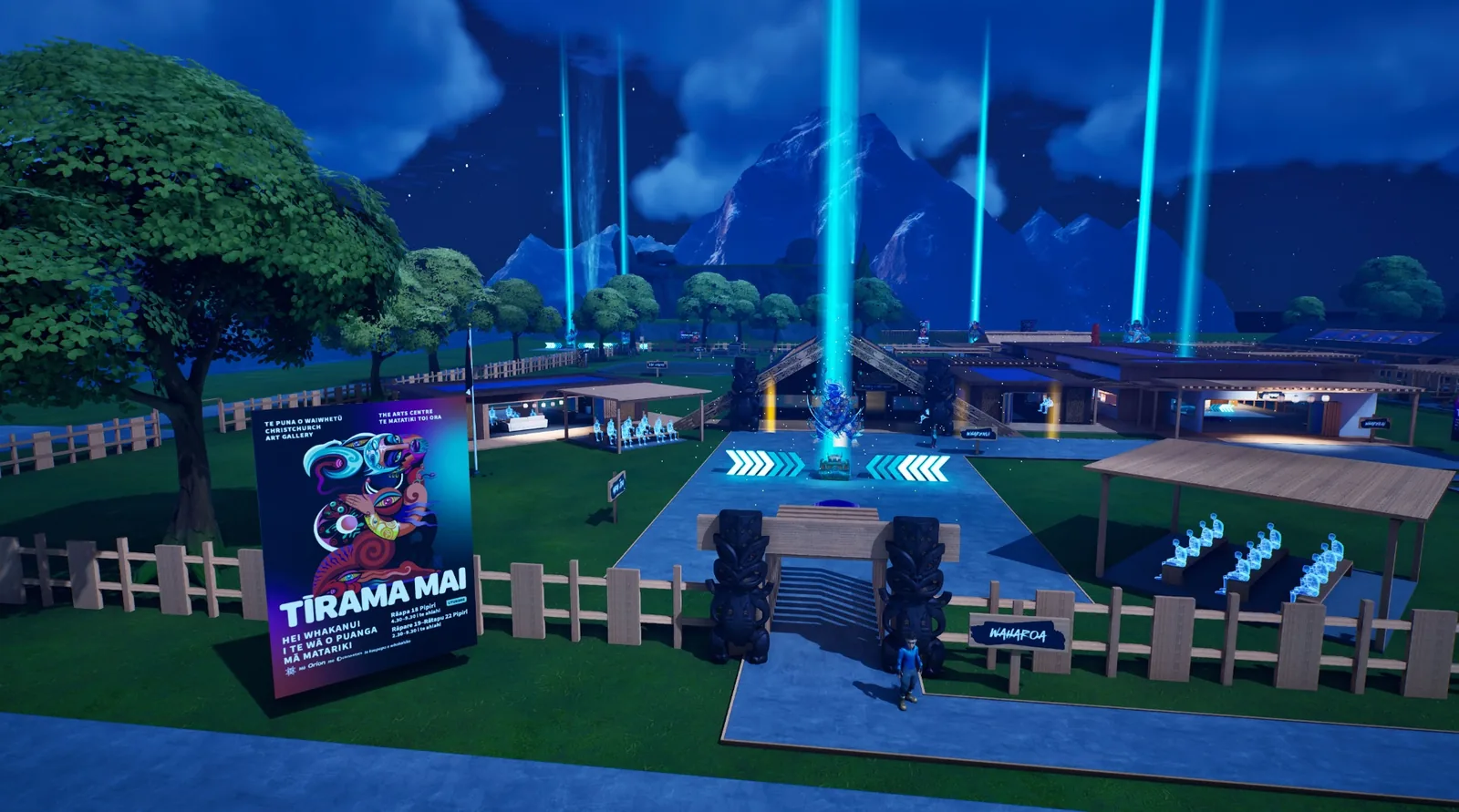
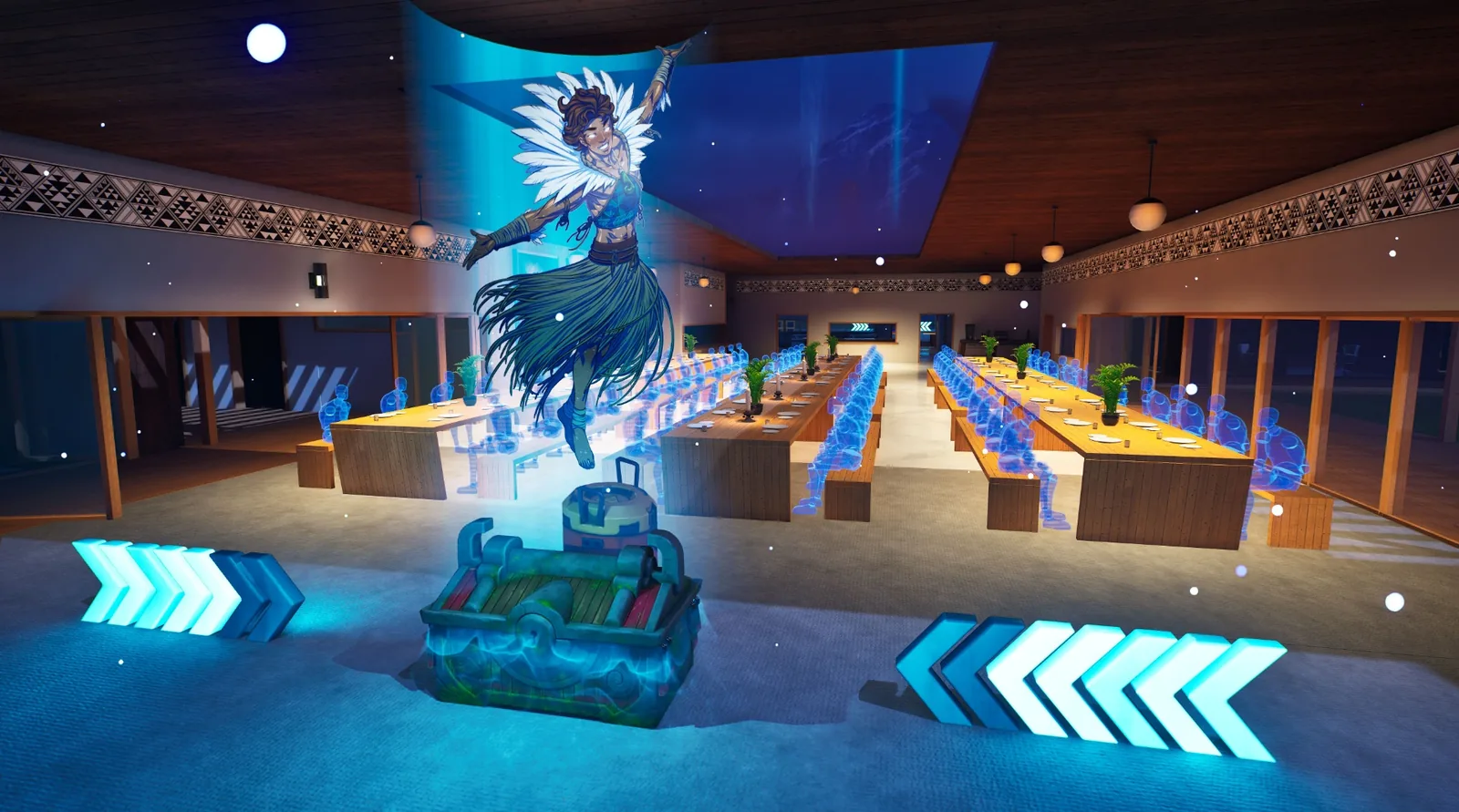
A Matariki-themed virtual marae built in Fortnite for the Tīrama Mai festival in Ōtautahi Christchurch - a live festival-booth activation combining large LED screens and physical controllers with an online-accessible Fortnite island.
Role
Deliverables
- Live festival-booth concept with large LED display and player controllers
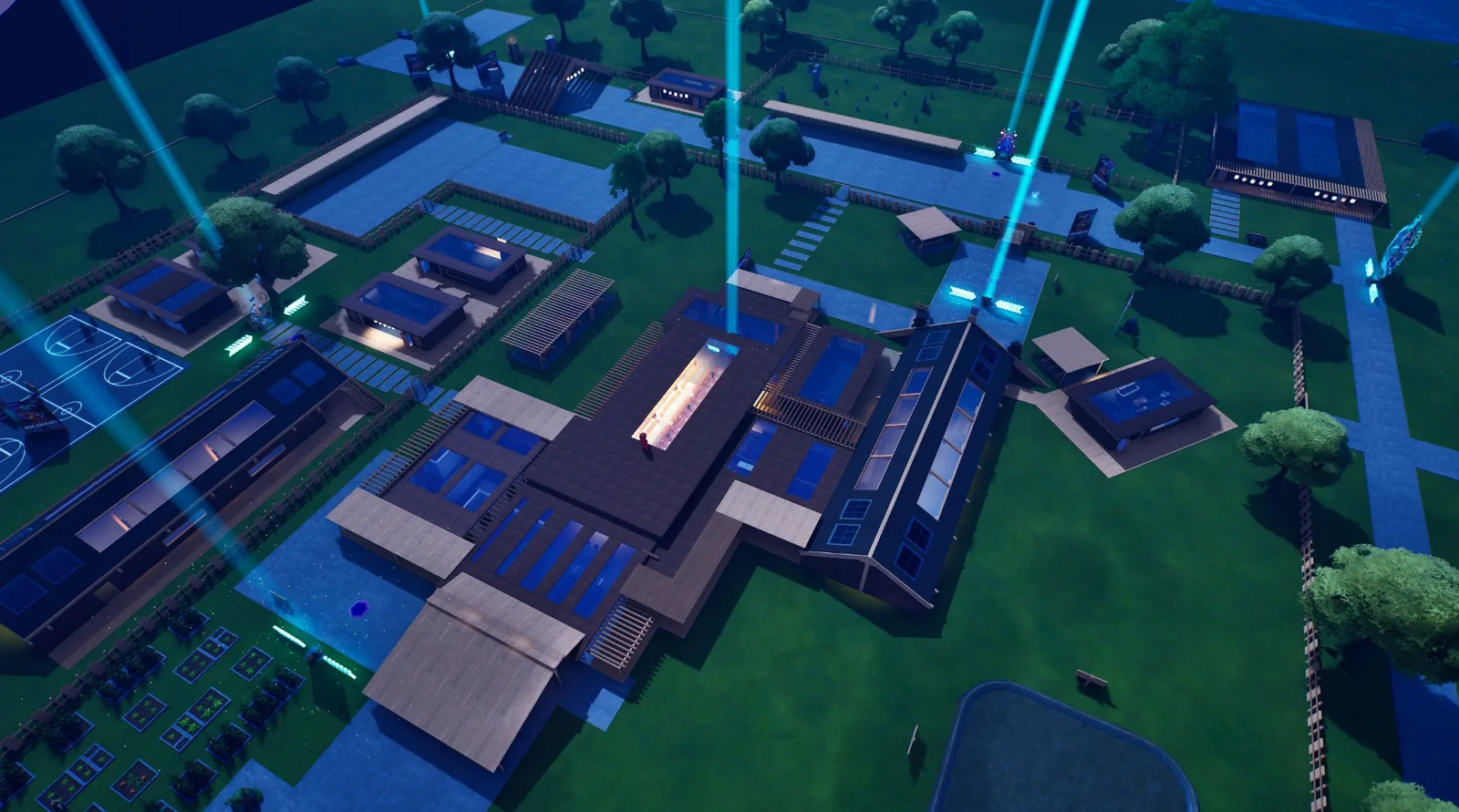
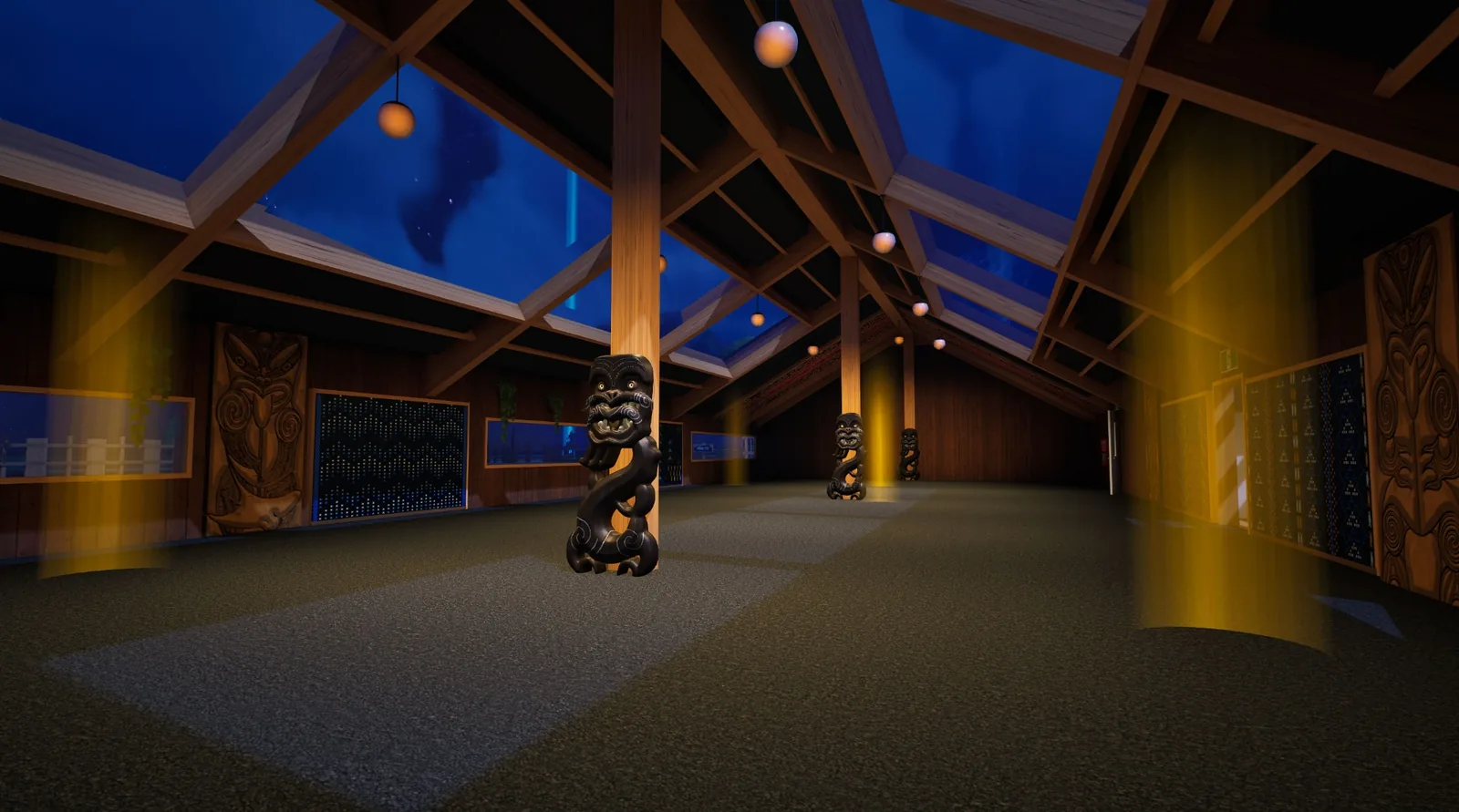
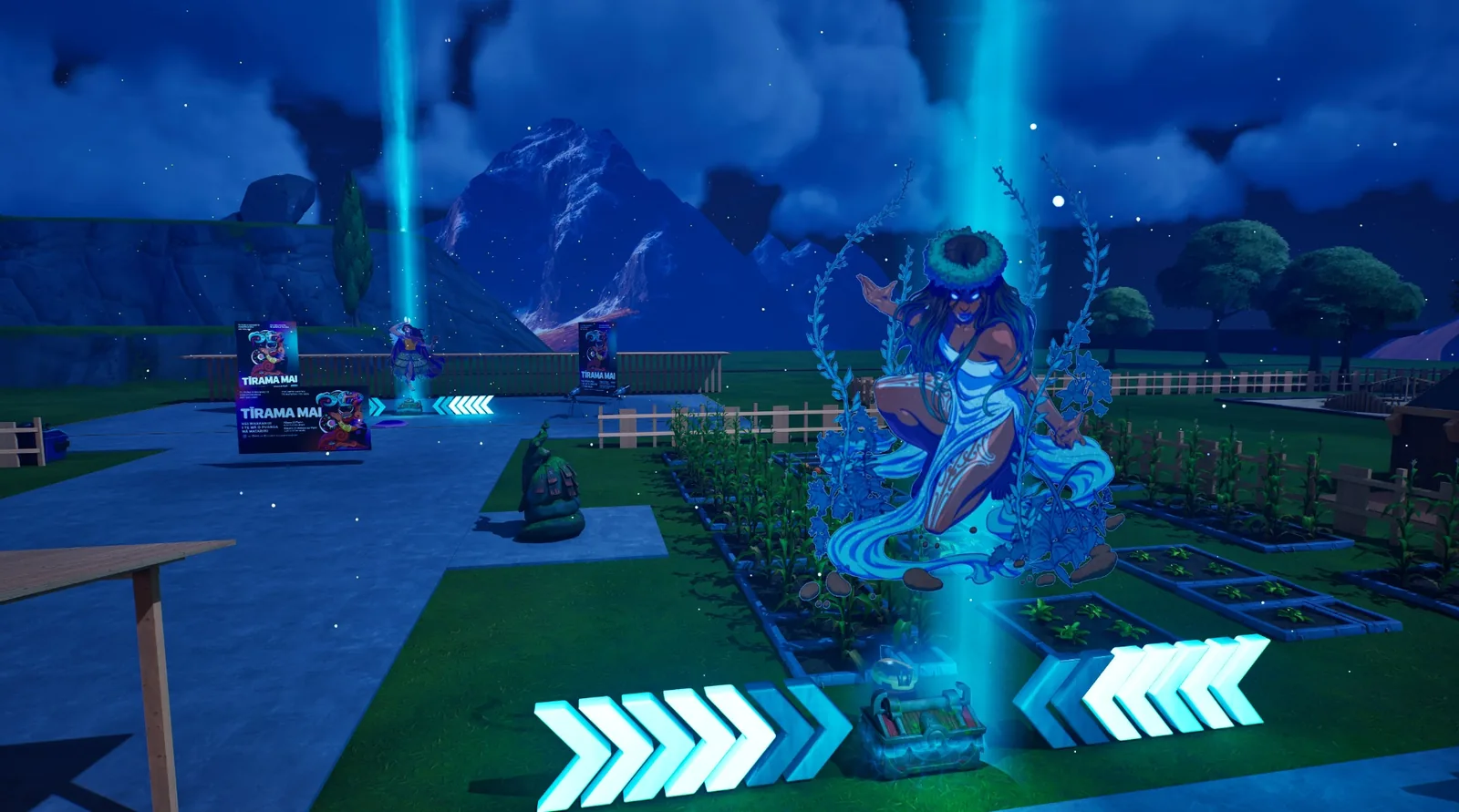
- Matariki-themed virtual marae built in Fortnite (tukutuku styling, posters, voice and audio, approved character assets)
- Hybrid play: 2–6 in-person players and up to 50 players online in a single session
- Cultural quality-assurance review
- Published Fortnite island (Island Code 4815-1223-7172)
Outcome
Delivered a published, accessible Fortnite island that held the spatial and relational logic of a marae while retaining the playability of Fortnite - a functioning civic activation for Tīrama Mai 2025 that extends beyond the festival as a living digital asset.
Project Overview
Māui Studios Aotearoa Ltd created a Virtual Marae experience within Fortnite for Christchurch City Council as an interactive activation for the Tīrama Mai festival in Ōtautahi Christchurch - a free, Council-produced Matariki festival providing opportunities to learn and engage with Puanga Matariki and Māori creation stories (Christchurch City Council, 2025). Adapted from Māui Studios' wider Māui Virtual Marae framework into a Matariki-specific experience, it combined a live booth with large LED screens and physical controllers for 2–6 on-site players with support for up to 50 players online in a single Fortnite session.
The project explored a genuinely new question: can a Marae - one of the most culturally significant environments in te ao Māori - exist meaningfully inside a global gaming platform? Rather than placing Māori aesthetics onto a Fortnite island, the studio designed an experience that held the kaupapa of the Marae - a place of gathering, learning, and cultural exchange - within an interactive context accessible to a diverse public.
The challenge operated on two levels at once. The first was cultural: a Marae is not a building or a visual style but a place governed by tikanga, relationships, and the mana of the people who belong to it. The second was contextual: the platform's competitive character sits in tension with the relational nature of a Marae, and the activation had to communicate tikaka, marae space, māra kai, and the whetū of Matariki accessibly and memorably for a busy festival audience.
SOW Snapshot
- Core Deliverables: Live festival-booth concept with large LED display and player controllers; Matariki-themed virtual marae built in Fortnite (tukutuku panel styling, posters, voice and audio, approved Matariki character assets); 2–6 in-person players plus up to 50 players online; cultural QA review; published Fortnite island (Island Code 4815-1223-7172)
- Audience: Tīrama Mai festival attendees - tamariki, rangatahi, whānau and the wider public, on-site and online
- Format: Live interactive festival booth plus an online-accessible Fortnite island, built in Unreal Engine and UEFN
- Event Context: Tīrama Mai 2025 (18–22 June 2025), across The Arts Centre, Christchurch Art Gallery, and nearby central-city locations
- Cultural Review: Joseph Hullen (Ngāi Tahu)
- Key Requirements: Cultural authenticity, public accessibility, hybrid in-person and online play, festival-ready booth simplicity, age-appropriate engagement
- Service Connection: Unreal Engine and UEFN, Immersive Design, Cultural storytelling, Public engagement, Visual Design
Outcomes
Māui Studios designed a Fortnite island that held the spatial and relational logic of the Marae - a place of arrival, gathering, learning, and connection - without claiming to replicate a specific marae or replace the real thing, using Māori architectural references and spatial organisation to create a place recognisably grounded in te ao Māori. Critically, the experience retained the fun and playability of Fortnite rather than reducing the platform to a static cultural display: players were gifted abilities by different Atua and given the autonomy to explore the space using those powers, so the game engine became an access tool - a way to bring people into a Māori cultural space who might not otherwise encounter one.
Because players moved through the space with that freedom, the activation did more than present a Marae - it surfaced questions about how a marae is perceived and used in a digital, game-based setting. Observing how people chose to behave, interact, and treat the space when given autonomy gave Māui Studios and the partners a rare opportunity to see how a Marae is engaged with under these conditions.
Delivered as a staffed booth (LED screens and controllers) plus an online release, the experience suited a high-footfall festival while extending beyond the event as a living digital asset. Fortnite Creative supports configurable sessions of up to 100 players, so the 50-player online target sits comfortably within range (Epic Games, n.d.). Cultural integrity was handled through review: the Matariki content was reviewed by Joseph Hullen of Ngāi Tahu, with the experience grounded in Te Papa's published knowledge of the Matariki stars (Te Papa Tongarewa, n.d.).
Impact
Intended Outcomes
- Increase public engagement with Matariki by placing cultural learning inside a playable virtual marae rather than a static display
- Help tamariki and rangatahi build familiarity with basic marae concepts, the Matariki stars, and associated knowledge through interactive exploration
- Create a festival activation that works both as an on-site shared experience and as an online-accessible digital asset
- Establish a reusable virtual cultural environment expandable for future civic, educational, or iwi-led activations
Broader Impact
- Opens a conversation about gaming platforms as cultural infrastructure, not just entertainment
- Shows a virtual marae functioning as a civic education tool rather than a digital novelty, aligned with the educational purpose of a free, city-wide public programme (Christchurch City Council, 2025)
- Created an unexpected observational dimension - letting players engage a Marae with full autonomy revealed how people perceive, use, and treat a culturally significant space in a game setting
- Positions Māui Studios for further public-sector and festival activations blending creative technology, cultural storytelling, and community engagement
Future Opportunities
- Expanded educational content on individual Matariki stars
- More detailed marae protocol interactions
- Facilitator-led school or museum versions
- Additional seasonal or iwi-specific themed reskins
- Repeat use across future Matariki and civic festival programmes
- A curriculum-linked version for use in schools as an immersive learning environment
References
- Christchurch City Council. (2025, May 9). Lots on offer at Tīrama Mai 2025. Newsline. https://www.newsline.ccc.govt.nz/news/story/lots-on-offer-at-tirama-mai-2025
- Epic Games. (n.d.). Mode settings in Fortnite Creative. https://dev.epicgames.com/documentation/en-us/fortnite/mode-settings-in-fortnite-creative
- Te Papa Tongarewa. (n.d.). Ngā whetū o Matariki | The stars of Matariki. https://www.tepapa.govt.nz/discover-collections/read-watch-play/matariki-maori-new-year/what-and-who-matariki/stars-matariki