Lost in the Q (The Weekend)
Rob Ruha / Indigination
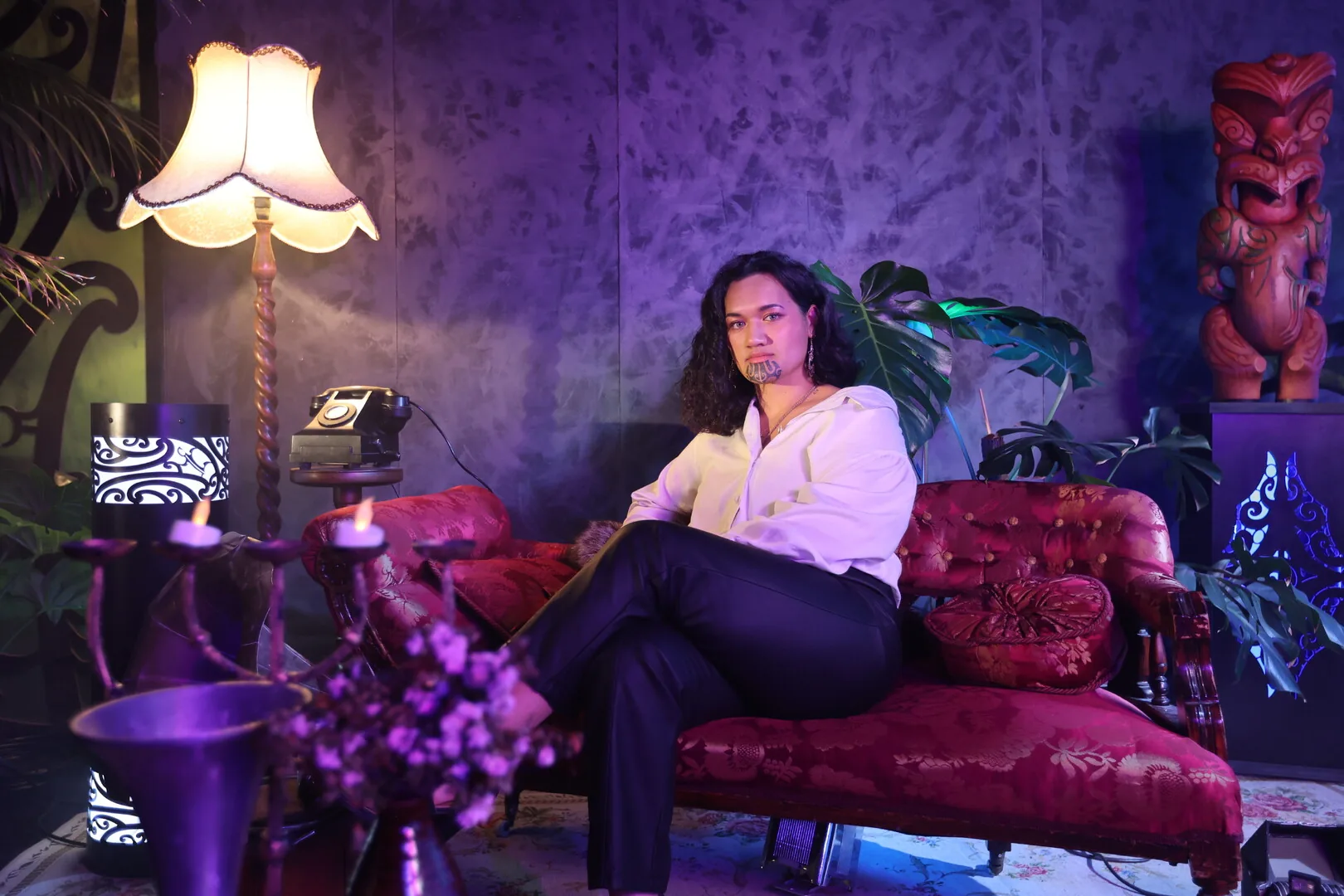
A 4:55 music video for Rob Ruha featuring Jhaymeān - a futuristic Māori visual world exploring moko revival, self-reclamation, and the impact of historical distortion on contemporary Māori identity, shot in the Māui Studios LED Volume and across Ōtautahi.
Role
Deliverables
- One completed music video (4:55) through a full cinematic pipeline
- Direction, cinematography, edit and grade
- VFX and virtual-production technical support
- Toi Māori design, set build, lighting and makeup
- Director-led futuristic Māori worldbuilding
Outcome
Fused waiata, speculative visual storytelling, and toi Māori design into a single screen experience where te ao Māori is felt, seen, and heard in every frame - helping establish a stronger visual language for Māori futurist screen work.
Project Overview
Lost in the Q is a 4:55 music video created for Rob Ruha featuring Jhaymeān, developed as a futuristic Māori visual world exploring moko revival, self-reclamation, and the impact of historical distortion on contemporary Māori identity. Shot in the Māui Studios LED Volume and across Ōtautahi, the project imagined a digital Māori utopia where identity, light, sound, and urban space converge in a world that feels at once utopian and melancholic.
Built around Rob Ruha's kaupapa, the video uses a speculative screen language to examine disappointment, misplaced trust, and the loneliness that can accompany cultural reclamation - positioning moko not as static symbolism but within a living, contested, future-facing Māori world. This direction aligns with Creative New Zealand's framing of ngā toi Māori as a deep and evolving field of creative practice (Creative New Zealand, 2022).
The central challenge was translating a deeply emotional kaupapa into a music video that felt cinematic, contemporary, and culturally grounded - carrying both grief and defiance while still working as a compelling music video rather than a didactic statement.
SOW Snapshot
- Core Deliverables: One completed music video (4:55) - direction and cinematography, edit and grade, VFX, virtual-production technical support, toi Māori design, set build and lighting, and makeup
- Production Approach: Virtual production using the Māui Studios LED Volume plus location filming across Ōtautahi
- Creative Worldbuilding: Director-led visual world centred on moko revival, Māori futurism, neon urban environments, and digital toi realms
- Audience: Rangatahi and adult audiences engaging with Rob Ruha's waiata and contemporary Māori screen culture
- Format: Bilingual (English and te reo Māori) performance-led music video
- Service Connection: Virtual Production, Film and Cinematography, Toi Māori Design, Motion Design and VFX, Cultural storytelling
Outcomes
Māui Studios developed the project through a high-contrast virtual-production and cinematic worldbuilding approach - layering gunmetal blacks, fluorescent light, Māori motifs, reflections, and rain-soaked urban textures into a futuristic Māori metropolis. The treatment gave form to the tension between abandonment and hope, while the LED Volume provided a controlled, immersive environment able to hold both realism and symbolism.
The completed work positioned moko, identity, and reclamation within a bold digital future, demonstrating Māui Studios' ability to combine virtual production, music-video craft, toi Māori art direction, and cultural narrative in one integrated outcome - helping establish a stronger visual language for Māori futurist screen work.
Impact
Intended Outcomes
- Create a high-impact visual companion to Rob Ruha's waiata carrying emotional complexity, cultural critique, and Indigenous pride
- Position Māori identity as central within speculative digital worlds - visible, powerful, and self-defined
- Reach both rangatahi and adult audiences through a bilingual, visually stylised, music-led format
Broader Impact
- Contributes to a wider movement in which ngā toi Māori are understood as evolving creative practice (Creative New Zealand, 2022)
- Demonstrates the value of culturally grounded screen storytelling - the arts supporting health and wellbeing across the lifespan (World Health Organization, 2019)
- Strengthens pathways for Indigenous-led visual culture that is both locally grounded and globally legible
Future Opportunities
- Expanded narrative universes within the Māori futurist visual world
- Live visual-performance assets and touring visuals
- Exhibition and installation versions of the worldbuilding
- Further collaborations placing Māori identity at the centre of speculative screen storytelling
References
- Creative New Zealand. (2022). Changing the story on arts, culture, and creativity in Aotearoa. https://creativenz.govt.nz/-/media/project/creative-nz/creativenz/publicationsfiles/advocacy/guide_for_arts_advocates_2up.pdf
- World Health Organization. (2019). What is the evidence on the role of the arts in improving health and well-being? A scoping review. https://www.who.int/publications/i/item/what-is-the-evidence-on-the-role-of-the-arts-in-improving-health-and-well-being-a-scoping-review